 By Clara Germani
Bill “Chilly” Chillingworth walked out the door of his home in the Pacific Palisades neighborhood on January 7th — a normal, bright California, Tuesday morning — for a business appointment 60 miles south.
He would never see the house again
He didn’t initially worry, because his neighborhood isn’t typical wildfire fuel: It’s a flat neighborhood with green lawns and no dry wildland around it, he says. But he can vividly chart the crescendo of panic triggered when his phone alarm erupted with an evacuation order. As he raced northward to meet his fiancé, they talked on the phone and feverishly checked off the so-called “p’s” she should grab as she fled: people, pets, pictures, paperwork.
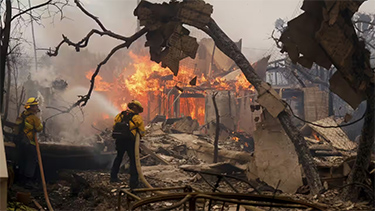
When they met at a California Pizza Kitchen a short distance south of their home, their cellphone alarms were going off. Each new ping eroded hope, he explains: “There was smoke detected in our master bedroom. Five minutes later we got an alarm that was detecting excessive heat in the kitchen. Five minutes later we got another alarm detecting excessive heat in the fan in the laundry room, and then we got a notification our front door had been breached then we got a notification in two 15-minute increments that the front door was still open. After a half an hour those messages stopped altogether, and we knew that we likely were facing a total loss of our house and all of our belongings.”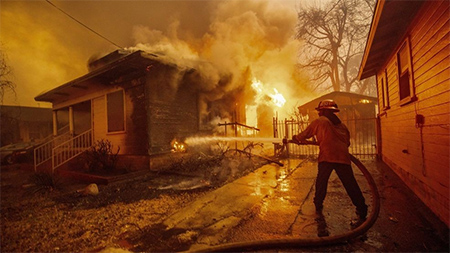
Chillingworth is the kind of guy who relates this dark chapter with self-awareness and some humor. The fire, he chuckles, drove the couple to break their 30-year streak of going without alcohol after the holidays during “dry January.” Even while hitting an outlet mall to buy shoes, socks, and underwear, he says he’s hyperaware he’s only one of thousands who have been displaced — and a privileged one, at that, financially able to start again.
But still, in a phone interview, his voice quavers twice: over the “profound distress” of seeing his neighborhood burning on TV news and in describing his heartwarming awe of being both giver and receiver in community service.
Rotary network brings aid to fire victims
Rotary is the platform for that reciprocity, he says. A 35 year member and president-elect of the Rotary Club of Santa Monica, California, he has an extensive global network of fellow members calling, texting, and emailing to offer help.
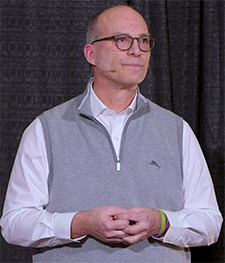
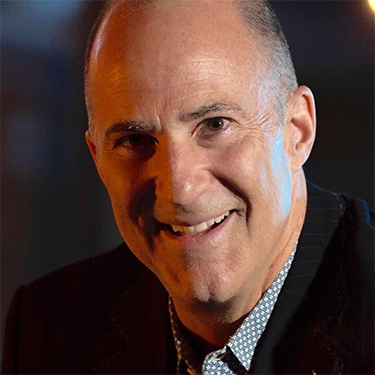
Those connections buoy him as he helps plan and participate in two major fundraising events. On March 1st, the club will hold its annual $150,000 black-tie benefit and will direct the bulk of this year’s proceeds to fire relief. And Chillingworth is scheduled as a featured speaker discussing his fire experience remotely for a Seattle-area fundraiser in late January. That fundraiser in Washington was organized in a matter of days by Larry Snyder (left photo), who comes to California every year to serve as the auctioneer at Santa Monica’s black-tie event. Snyder isn’t a Rotary member himself, but on the sheer basis of his years of work with and respect for Santa Monica, he believes they are a conduit for philanthropy that “people can trust.”
“Rotary is all about jumping into action as quickly as we can,” says Chillingworth, whose club of 100-plus members has kicked into service overdrive, even with close to a quarter of those members now without homes. (As a point of reference, all members of the much smaller Pacific Palisades Rotary club have lost their homes, and the business where the club held its meetings is also gone.)
 Quick action is important, especially if it’s the right action, says Brady Connell, district governor-nominee for Rotary District 5280 (right photo).
A lesson driven home in the outpouring of help is that random collection of physical donations may not be as efficient as a more purposeful needs assessment, says Connell, a member of the Rotary Club of Playa Venice Sunrise. “That’s where Rotarians can really come in because they are very connected in the community.”
Rotarians have been helping displaced people in their communities with paperwork for insurance and the Federal Emergency Management Agency, lending spare bedrooms and providing money, clothes, food, and listening ears. But there’s a bigger, longer-term picture, says Connell. His club is working with the Santa Monica club, which includes leaders from crucial frontline assistance organizations like the YMCA, Salvation Army, Boys & Girls Club, and Meals on Wheels, to focus on fire relief and “what families are going to actually need when they are given access to their properties.”
The two clubs have partnered on a “safe search” project to provide ash sifters and personal protective equipment (PPE) to families returning to their homes to go through the ruins. Home Depot has donated 150 sifters to the two clubs, and they have applied for a grant from the District 5280 Wildfire Disaster Relief Fund to buy protective kits of goggles, body suits, gloves, and booties. 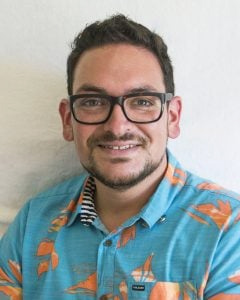
Steering Rotary momentum across a large chunk of the Los Angeles basin is District Governor Albert Hernandez (left photo). Albert operates a homeless services nonprofit in Burbank, which is situated between the two big fires that were still burning in late January. . . Pacific Palisades to the west and the Altadena community to the east. With his work and service missions aligned, Albert is accustomed to meeting human needs which, he says, fall into two categories: the monetary and “sense of touch, as I call it.”
“Monetary contributions allow us to get what we need when we need it,” he says, convinced it should be a service priority after witnessing evacuation centers across L.A. turning donations of food and clothing away because there was no storage space.
The district’s fire relief fund has collected $250,000 as of January 20th. The money will be used to help organizations that serve the community as well as Rotary members who have personally lost homes and businesses. In addition, some funds will be part of matching grants for projects dreamed up by clubs to meet the needs in their own areas.
Hernandez sees the powerful community bonding in the face of disaster as “sense of touch.” He recounts how a Burbank club’s recent lunch meeting program consisted of members expressing their feelings, one by one around the room. The intimacy of that crisis response, he says, echoes across state and international borders with the hundreds of offers of help he has received. It’s particularly poignant, he says, after years of service trips abroad, to now be on the receiving end of Rotary members’ service offers — one of which came from a club official in Ukraine where war continues.
Hernandez is looking beyond the moment, to a future where changes in patterns of precipitation, temperature, and wind is driving hotter, fiercer fire seasons here. He offers this perspective: “A lot of people are worried about the homes that we’ve lost; but I think we’re forgetting about how many businesses people lost. And … how many children’s schools have burned down. How many children are out of school now? When are they going to have a sense of normalcy again?”
How to help
- Donate today to Rotary’s Disaster Response Fund. Rotary districts in wildfire-affected areas can apply for grants from the fund to quickly provide essential supplies.
- Fundraise among your colleagues, friends, and family members using Raise for Rotary.
- Learn how Rotary members help their communities respond to disasters and about local relief efforts by District 5280 and District 5300.